





 Microsoft Fabric
Automating DDL refreshes from any database with the SqlDBM API
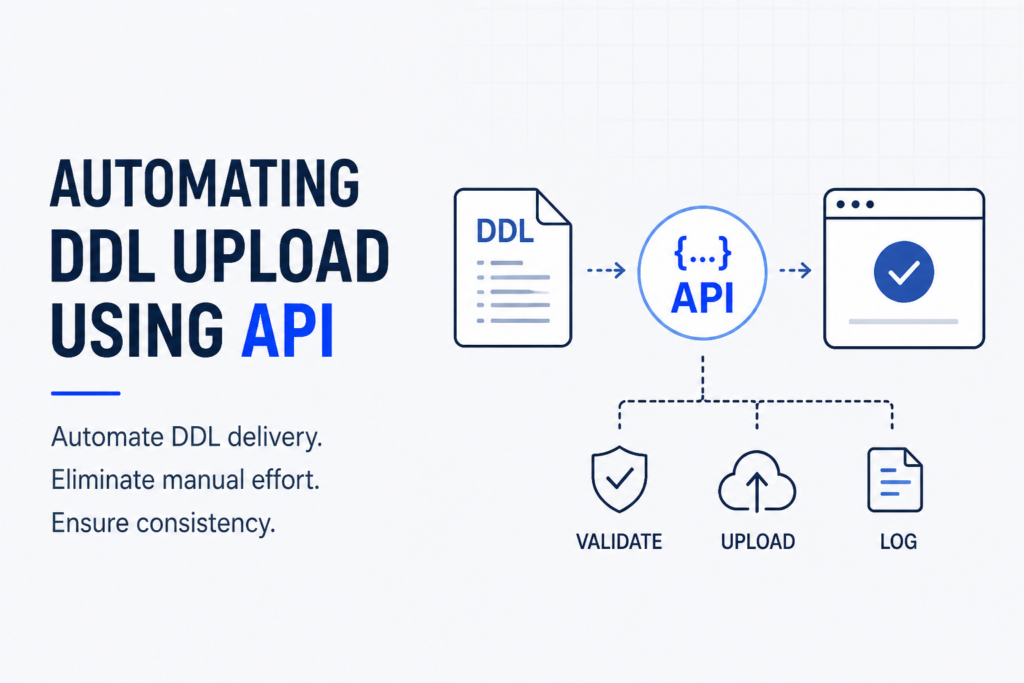
The problem Keeping a data model in sync with what’s actually running in production is easy when your modeling tool can plug straight into the database. It gets ugly fast when the database is on-prem, sits behind a VPN, lives in a customer environment you can only reach through a jumphost, or simply isn’t internet-reachable for […]
Introducing AI Experience: Governed, role-aware AI for enterprise data teams
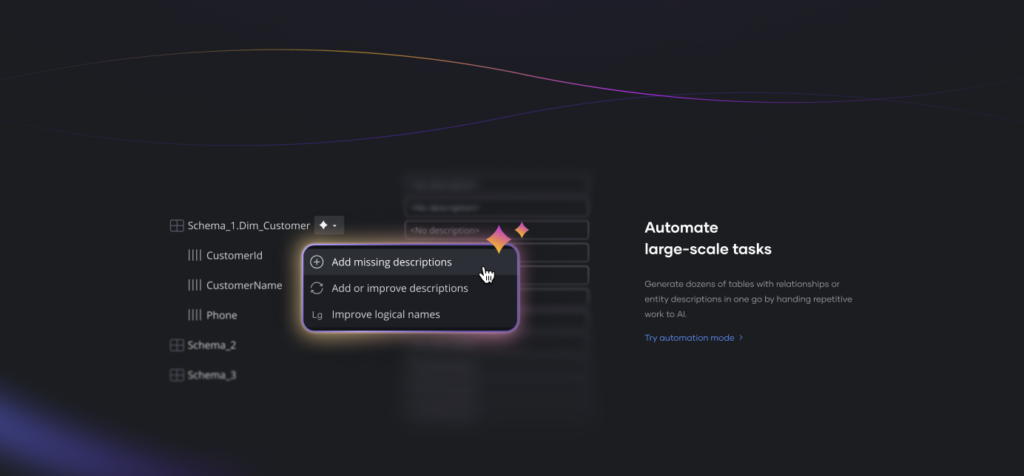
A new category inside SqlDBM, starting with Copilot V1. For the past year, we’ve been asking a single question: what would AI look like if it were built for the way enterprise data teams actually work? Not AI bolted onto a modeling tool. Not a generic chatbot that happens to live in a data […]
Enterprise Data Modeling for AI: 5 Lessons from 30 Years of Data Architecture
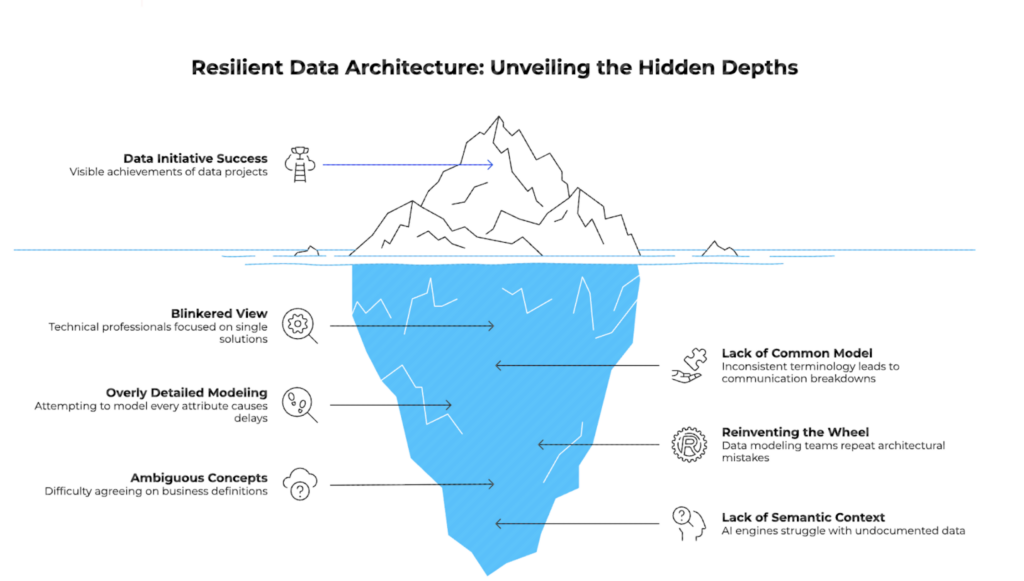
5 lessons from 30 years of enterprise data modeling with John Giles We’ve all heard that “your AI is only as good as your data”. But what does it actually mean? What all those screaming titles mean is the following: to get accurate answers from an AI agent, the data it reads must be structured, […]
Your Data Stack Is Ready. Your Semantics Aren’t. That’s the Real AI Problem.
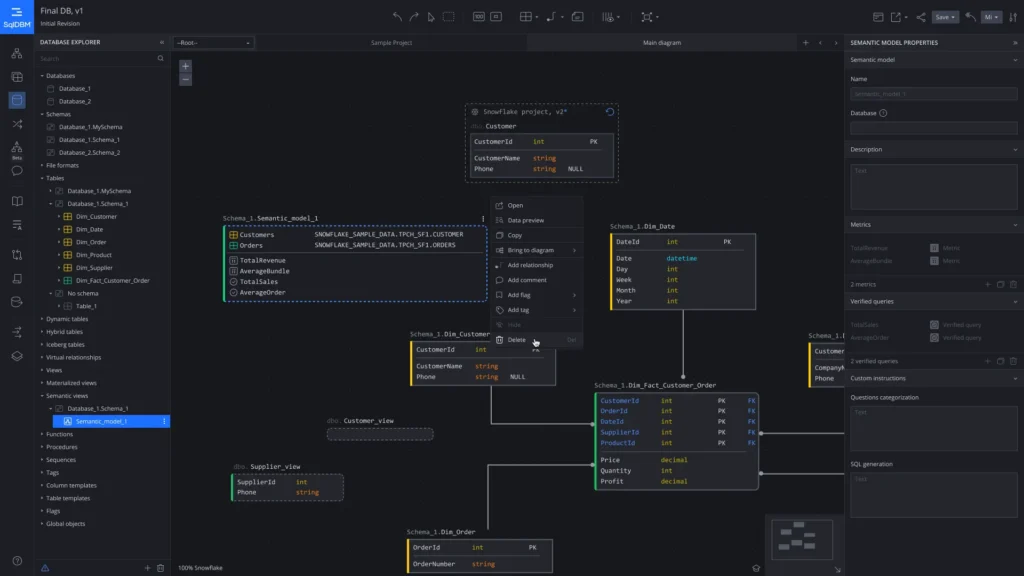
Every enterprise AI project runs into the same issue. It’s not the model. It’s not even the data. It’s the meaning behind the data. There’s a familiar moment in almost every rollout. The pipelines are in place. The warehouse is clean. The LLM is connected. A business user asks a simple question: “What was our […]
Why AI Projects Fail Without Data Modeling
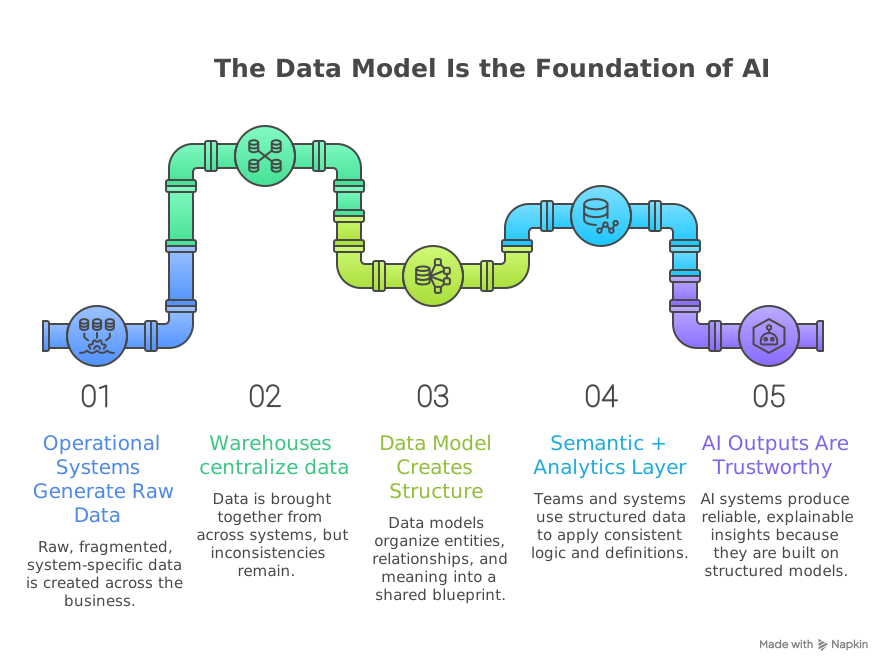
Over the past decade, enterprise data infrastructure has changed dramatically. Storage is elastic.Compute scales automatically.Cloud data warehouses handle workloads that once required months of tuning. For most organizations, those problems are largely solved. But another challenge has quietly become the limiting factor. It’s not storage.It’s not compute. It’s shared understanding of what the data actually […]
dbt Meets ERD: A Unified View of Your Data Landscape in SqlDBM

SqlDBM now shows you what dbt can’t — the full story of your data When it comes to database transformations, the dbt framework is practically an industry standard. Dbt helps teams transform raw data into clean, auditable data assets while incorporating software engineering best practices, such as modularity, testing, and CI/CD, into the analytics layer. […]
John Giles’ Data Model Patterns — Now Available in SqlDBM
At SqlDBM, we believe the best data modeling starts with understanding the business — not reinventing the wheel. That’s why we’re excited to announce that we’ve partnered with John Giles to bring his proven Data Model Patterns into SqlDBM, giving our users a powerful head start on their modeling projects. Who Is John Giles? John […]
SqlDBM Model Governance vs Data Catalogs: does your organization need both?
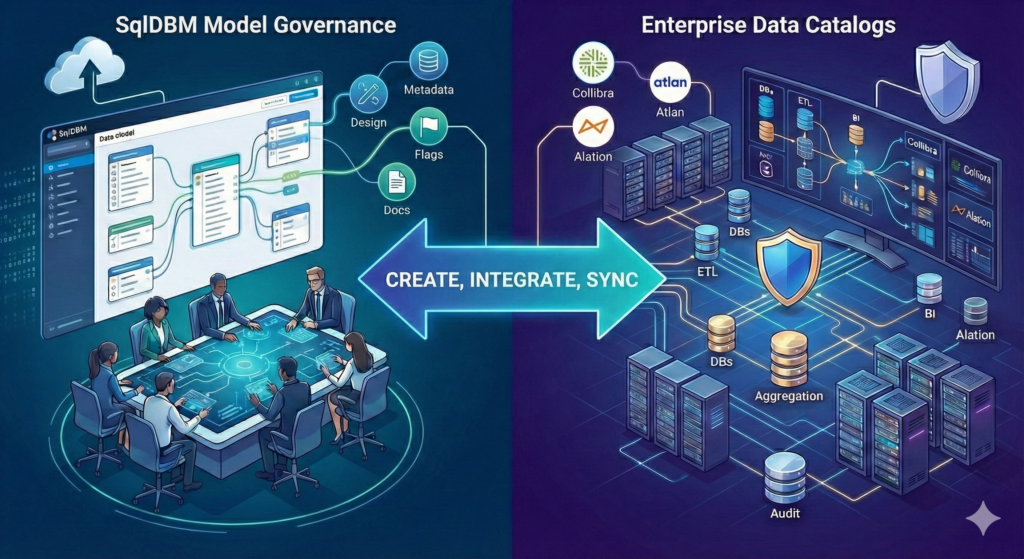
When evaluating data management tools, a common question arises: should we invest in a dedicated data catalog like Collibra, or can a modern data modeling platform like SqlDBM cover our governance needs? The short answer: yes (and yes)! SqlDBM can serve as both a standalone governance solution for teams building their data practice from the […]
Mastering data type aliases: migrations, modeling, and Snowflake synchronization
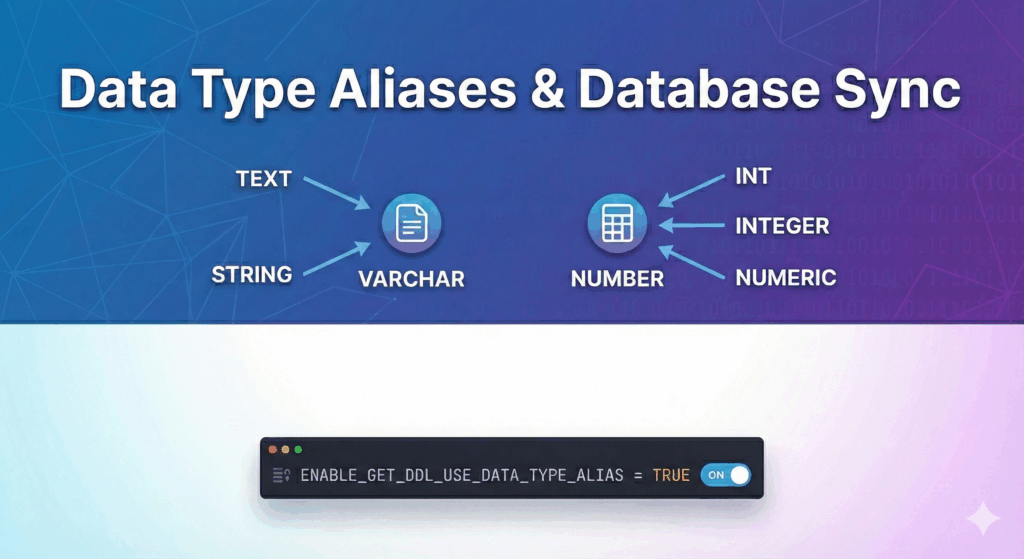
In the diverse ecosystem of relational databases, data type aliases are a common yet valuable feature. Simply put, an alias, also known as a synonym, is another name for a foundational system data type. For example, INTEGER might be the default system type, and aliases may include INT and INT4 (as in Postgres). Here […]
SqlDBM Copilot: Embedded AI for Modern Data Modeling

SqlDBM Copilot is an AI assistant built directly into the data modeling environment. Instead of acting as an external chatbot, it lives inside the modeling workflow, understands your projects, and works with your existing schemas, objects, and metadata. With it, you can move faster from ideas to models, automate repetitive work, and keep documentation and […]